Property Insurance for Older Senior Living Buildings: The Renewal Is Won in the File, Not the Rate
24 years.
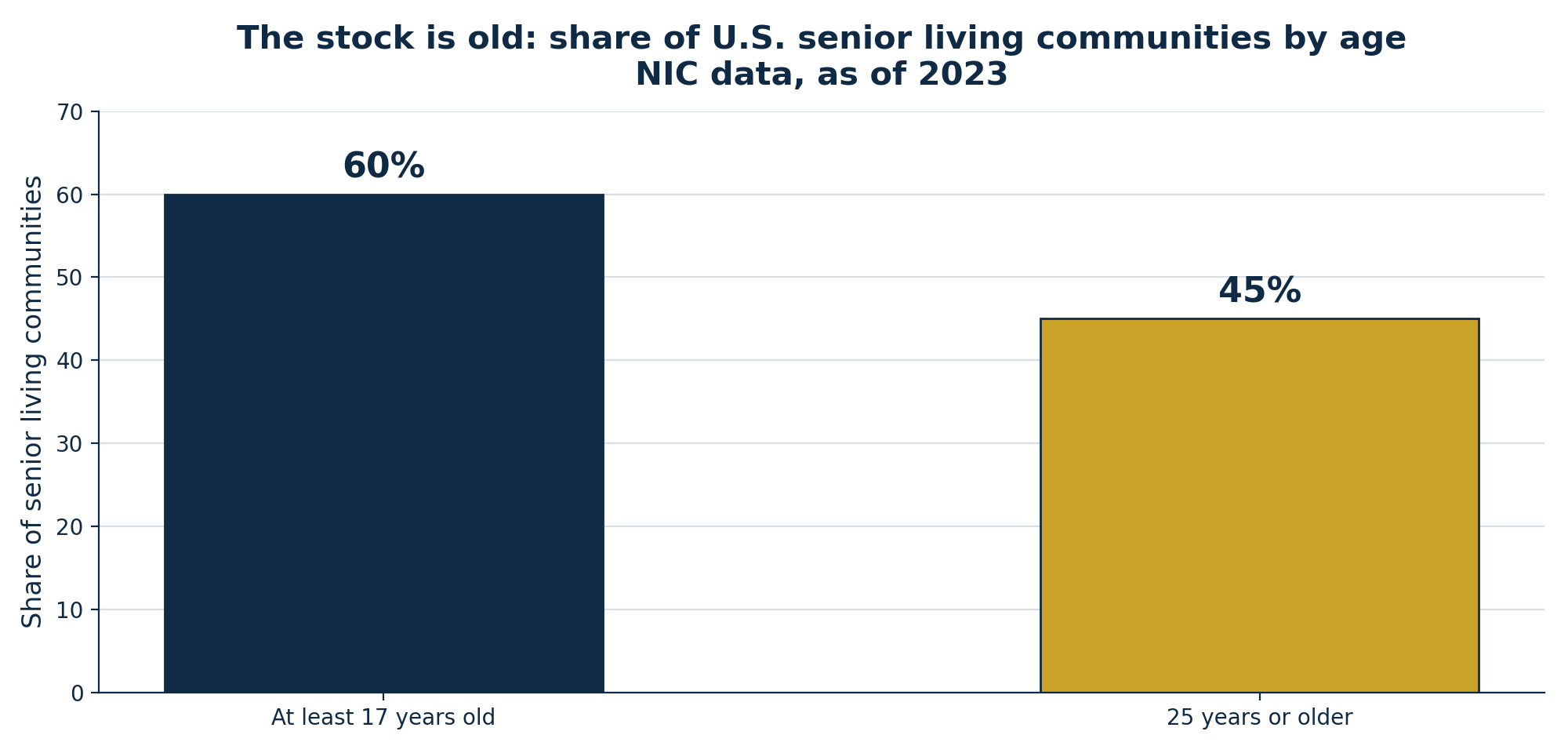
That is the average age of a senior housing property in the United States, according to NIC data. About 60 percent of communities are at least 17 years old. About 45 percent are 25 years or older.
The stock is not getting younger. NIC MAP reports that more than 40 percent of existing senior housing properties are now more than 25 years old, and that construction starts fell about 67 percent, from more than 30,000 units to roughly 10,000 units in 2025. At that building pace, most operators will be running older buildings for a long time. The question is whether the property program was built for the building they actually have.
Our read of the 2027 property market for senior living: essentially stable. Read that carefully. Stable is not the same as easy. Any risk with catastrophe exposure will be heavily scrutinized through probable maximum loss studies and facultative reinsurance, and some smaller senior living accounts are already seeing deductible increases.
So for an older building, the rate is rarely the fight. The fight is insurability, valuation, deductibles, and the gaps that only show up after a loss. This article walks through the five files that decide that fight, and the math behind each one.
First, the rebuild math nobody can argue with
A property limit is only as good as the valuation behind it. If the number on the policy is lower than what it costs to rebuild today, every other conversation is built on sand.
CBRE, in its 2026 Senior Housing Development Costs survey, put the average cost of senior housing development at $388,830 per revenue unit, or $364 per square foot. Hard costs alone averaged $262.75 per square foot, which was 72.5 percent of total development cost.
The Weitz Company, in its 2026 construction brief for the American Seniors Housing Association, put mid level construction costs, at a city index of 100, at $242 to $293 per gross square foot for independent living, $281 to $358 for assisted living, and $318 to $376 for skilled nursing. Weitz also expected construction costs to grow 3 percent to 6 percent through the end of the year.
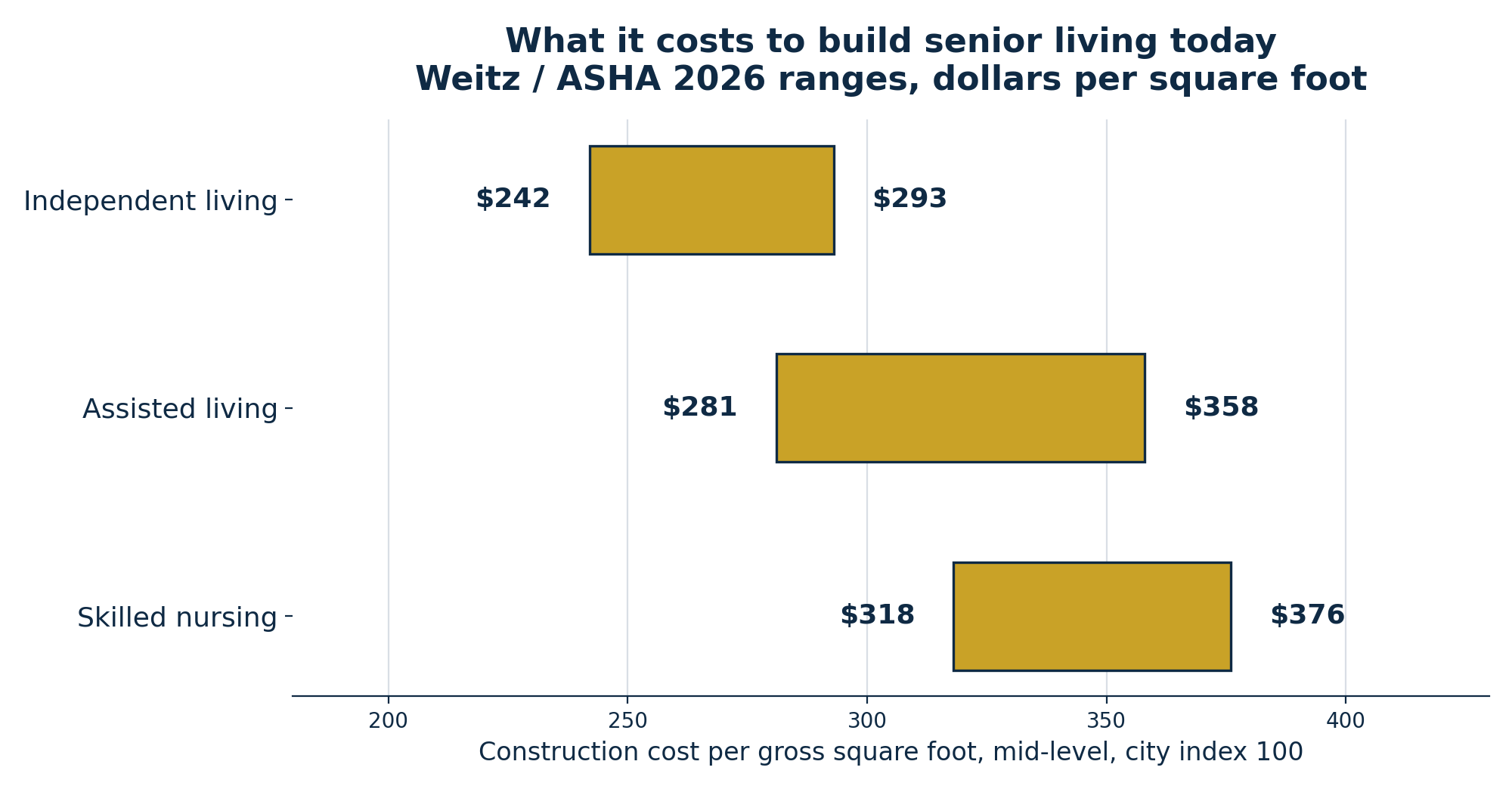
Now run that against a real building. Take an 80,000 square foot assisted living community. At a conservative $340 per square foot, replacement cost is $27,200,000. If that building is still insured at $20,000,000 because the valuation has not been redone since before the pandemic, the operator is not saving premium. The operator is quietly self insuring $7,200,000, and may be penalized on even a partial loss. That penalty has a name, and it is in almost every commercial property policy.
The coinsurance penalty, worked in full
Most commercial property policies carry a coinsurance clause, commonly 80 percent, 90 percent, or 100 percent. In plain terms: insure the building to at least that percentage of its true replacement cost, or the carrier pays only a share of any loss, even a small one.
| Illustrative example, labeled as such | Amount |
|---|---|
| Building size | 80,000 square feet |
| Replacement cost at $340 per square foot | $27,200,000 |
| Coinsurance requirement at 80 percent | $21,760,000 |
| Limit actually carried | $20,000,000 |
| Share the carrier pays on a loss: $20,000,000 divided by $21,760,000 | 91.9 percent |
| Partial water loss | $2,000,000 |
| Carrier payment before deductible: $2,000,000 times 91.9 percent | $1,838,235 |
| Less a $25,000 deductible | $1,813,235 |
| Cost the operator absorbs on this one loss, from the valuation gap alone | $186,765 |
That is the best known bargain in this business, and it runs the wrong way. A valuation that saves a few thousand in premium can cost six figures on the first serious claim. Get a current replacement cost valuation, in writing, from a recognized valuation source, and keep it in the renewal file. If you disagree with the number, argue it with evidence before binding, not with a claim check after a fire.
A low property limit is not a saving. It is a retention you never approved, hiding inside a policy you thought was full coverage.
The five files underwriters actually read on an older building
Underwriters price older buildings off a standard frame: construction, occupancy, protection, and exposure. You cannot change the year the building was built. You can change almost everything the underwriter reads about what has been done since.
1. The roof file
Roof age is the first question on most older building submissions, and the least forgiving. An underwriter wants the year of last full replacement, the material, the repair history, and photographic evidence of condition. A 22 year old roof with no documentation reads as a claim waiting for a storm. The same roof with a dated replacement invoice, annual inspection reports, and repair records reads as a managed asset. If the roof is near the end of its life, say so, and put the funded replacement plan in the submission. A plan with a date beats a hope with no date, every time.
2. The systems file: electrical, plumbing, and HVAC updates
Original wiring, original plumbing, and original heating plant are the three phrases that move an older building from standard pricing to a difficult placement. Document every update by year and by scope: panel replacements, repiping, boiler and chiller work, and any removal of older systems a carrier has flagged in the past. Partial updates count, but only if they are documented building by building. In a portfolio, the building with no records gets priced as if nothing was ever done, because the underwriter has nothing else to go on.
3. The water file
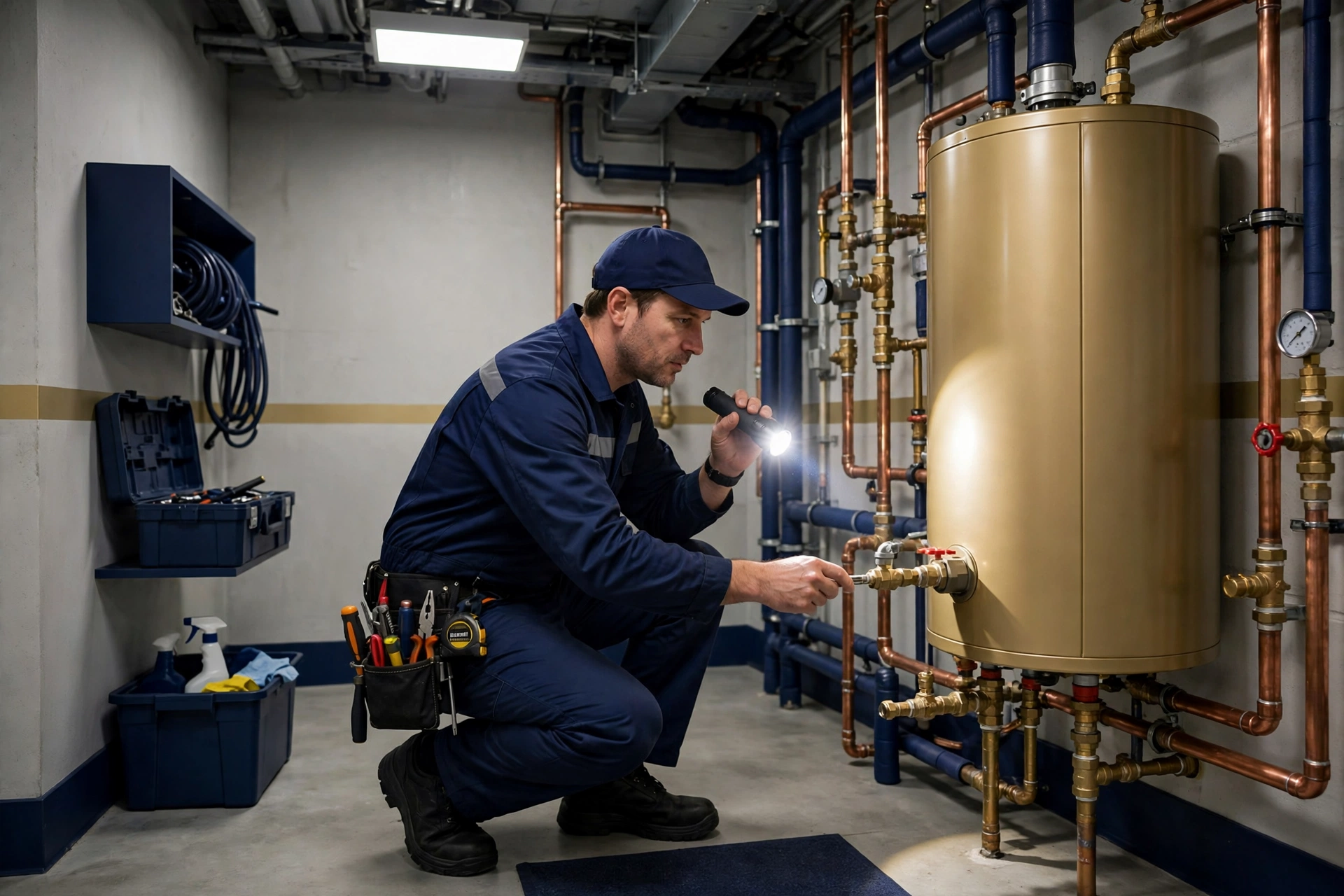
Fire gets the headlines. Water does the steady damage. Trade coverage of a study by The Hartford reports that water damage is the second most common insurance claim filed by small to mid sized businesses, with an average claim cost of $17,000. Treat that figure as a floor for senior living, not a guide. In a senior living building, a supply line failure on an upper floor is not just drywall and flooring. It is resident relocation, extra expense, possible business income loss, and a mold clock that starts the hour the water does.
Underwriters now ask, in writing, about automatic water shutoff valves, leak sensors in mechanical rooms and above critical areas, and a documented response plan that says who gets called at 2 a.m. and how fast the water stops. If those controls exist, put the vendor, the install date, and the test log in the file. If they do not exist, price the controls against one avoided loss. On the math above, one prevented upper floor leak pays for a lot of sensors.
4. The life safety file
Sprinklers, alarms, emergency power, and kitchen suppression are not paperwork items on an older building. They are the difference between a property loss and a resident tragedy, and underwriters and regulators read them that way. Keep inspection and testing records current, close every deficiency in writing, and be able to list what is installed, when it was last tested, and what was fixed. A passed inspection that cannot show the underlying test records is a weak file. A complete file, with deficiencies and their corrections in the same folder, is a strong one.
5. The ordinance or law file
This is the gap that surprises owners of older buildings most, because it has nothing to do with the part of the building that burned or flooded. Ordinance or law coverage has three parts. Coverage A pays for loss to the undamaged portion of the building when code requires it to be demolished. Coverage B pays the demolition cost. Coverage C pays the increased cost of rebuilding to current code.
An older building is, by definition, the building most likely to be out of step with current code on accessibility, life safety, energy, and structural requirements. If a serious loss forces a rebuild, the code upgrades are not optional, and without adequate ordinance or law limits they come out of the operating budget. Check the limits against the age and construction of the building, not against what the policy has carried for a decade.
Deductibles and business income: the other two numbers to read before you bind
Two more items decide what an older building program really costs, and neither is the premium.
First, deductibles. In catastrophe exposed areas, percentage deductibles for wind and hail are now common, and a percentage is not a dollar figure until you do the math. A 2 percent wind deductible on a $27,200,000 building is $544,000 out of pocket before the carrier pays a dollar. Smaller senior living accounts are already seeing deductible increases. Read every deductible in dollars, per building, before binding, and make sure the balance sheet can carry the largest one on its worst day.
Second, business income and extra expense. A senior living building cannot send its customers home and reopen next quarter. If residents have to move, the operator pays to move them, houses them, feeds them, and staffs their care somewhere else, while revenue at the damaged building stops. That is extra expense, and it is the coverage that keeps a property loss from becoming an operating failure. Test the limit and the period of restoration against a realistic rebuild timeline for an older building, including permitting and code review, not against the timeline in a brochure.
What to do in the 90 days before renewal
- Commission a fresh replacement cost valuation for every building over 20 years old, and reconcile the policy limit to it in writing.
- Build the roof and systems file: replacement dates, materials, invoices, inspection reports, and photos, one folder per building.
- Document water controls: shutoff valves, sensors, response plan, and test logs. If controls are missing, get a priced proposal and put it in the submission as a committed plan.
- Assemble the life safety file: sprinkler, alarm, generator, and suppression test records, with every deficiency and its correction.
- Recheck ordinance or law limits against the age of each building and current local code exposure.
- Convert every deductible to dollars and confirm, in a board or ownership minute, that the largest one is funded.
- Stress test business income and extra expense against a 12 to 18 month restoration for your oldest building, including resident relocation costs.
None of this requires a new building. It requires a file that proves the old building is a managed building. In a stable property market, that proof is the negotiation. Carriers compete for risks they can defend internally. An older building with a thin file is a risk an underwriter has to argue for. An older building with a complete file is a risk an underwriter can win with.
The buildings are not getting younger, and at roughly 10,000 new units a year the industry is not replacing them. The operators who will pay the least for property insurance over the next decade are not the ones with the newest buildings. They are the ones who can prove, on paper, that an older building is being run like an asset, not inherited like a problem.
Sources: NIC and NIC MAP data on property age and the senior housing supply gap, nicmap.com; CBRE, 2026 Senior Housing Development Costs, cbre.com; The Weitz Company / American Seniors Housing Association 2026 construction brief, as reported by McKnight’s Senior Living; The Hartford water damage study, as reported in trade coverage. The coinsurance example is illustrative arithmetic on round numbers.