What LTC’s $160M SHOP Bet Means for Operators
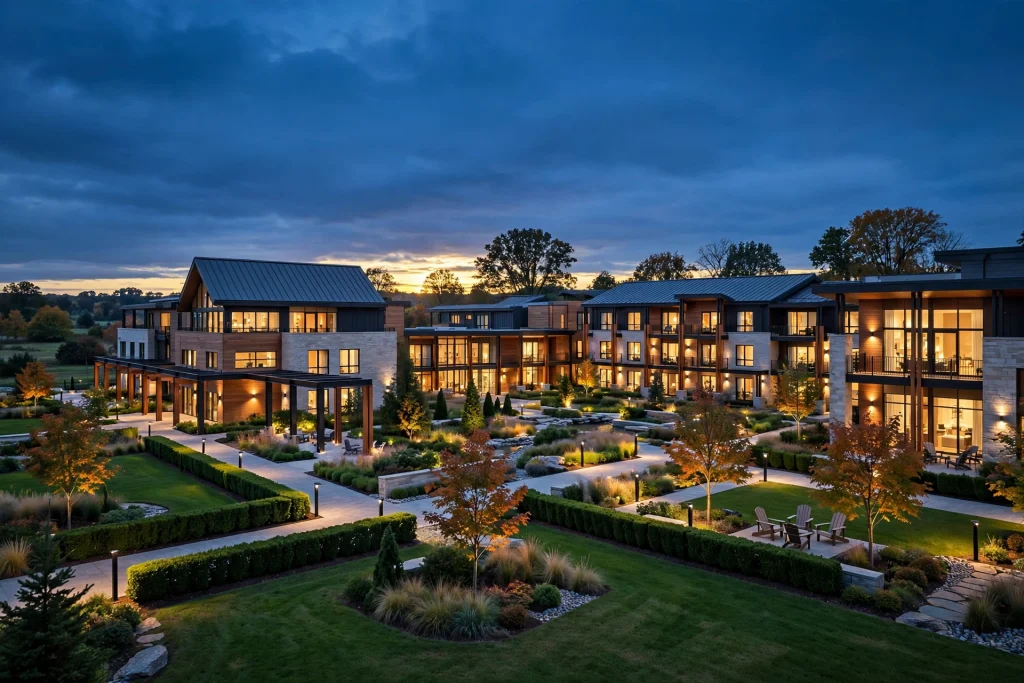
$160 million. Three buildings. 270 units.
That’s LTC Properties’ latest move, announced this week: nearly $160 million to buy three senior living communities — one in Florida, two in Virginia and Maryland — and run them inside its SHOP portfolio. The operators: Charter Senior Living and IntegraCare.
Here’s why it matters to you even if you never sell to a REIT: it tells you exactly what capital is paying for right now. And it’s the same thing your insurance underwriter is pricing.
The deal, in numbers
LTC is buying 270 independent living, assisted living, and memory care units with an average age of six years, in NIC-designated primary markets. The expected year-one cap rate: about 6.5%. The anticipated unlevered IRR: low to mid-teens.
The funding tells its own story. LTC is paying for these operating assets by selling $260 million of triple-net properties — three skilled nursing centers and 17 seniors housing communities — booking an expected $225 million gain. It’s giving up $12 million in annualized rental income to do it.
Read that again: a REIT is selling guaranteed rent checks to buy operations.
This is also a continuation. LTC kicked off 2026 with a $108 million acquisition of three communities totaling almost 400 units, built between 2014 and 2018, at 92% stabilized occupancy, bought for less than replacement cost at roughly a 7% year-one yield. For all of 2025, the REIT put $360 million into SHOP. Year to date, it’s deployed roughly $740 million. The SHOP platform has gone from 13 communities at its May 2025 launch to 46, and now drives more than 40% of the company’s net operating income. And there’s more coming: LTC expects the payoff of a $180 million mortgage loan in early to mid-November, freeing up capital that will likely fund the next round of operating-asset buys.

What capital is actually buying
LTC isn’t buying buildings. It’s buying operations.
Triple-net leases are mailbox money — the tenant sends a check and the REIT doesn’t touch operations. SHOP (senior housing operating portfolio) is the opposite: the REIT shares in the operating upside and downside. You only make that trade if you believe the operations are worth more than the rent.
Every deal in this wave shares the same profile: newer buildings, strong occupancy, proven operators, primary markets. Capital is paying up for one thing — operational certainty. A full building with a clean history and a proven team.
That’s the signal for every operator, whether you’re selling or not. The market is putting a premium on buildings that run well. Not on square footage. On performance.
The insurance angle nobody talks about
Here’s what I keep coming back to: the numbers capital studies before it writes a $160 million check are the same numbers your underwriter studies before it sets your premium.
Occupancy. Acuity management. Incident and loss history. Staffing stability. How a building responds when something goes wrong.
A buyer looks at your loss runs to price risk. An underwriter looks at your loss runs to price your policy. A buyer wants to know your fall rate and your survey history. So does your carrier. Operational certainty is what drives your valuation — and it’s part of what drives your insurance pricing. They move together.
This is why I tell operators to run every building like someone is about to underwrite it. Because two someones are: the buyer who might acquire it, and the insurer who prices it every year. The operators who can show clean loss runs, documented incident response, stable occupancy, and a real handle on acuity don’t just get better acquisition offers. They get better renewal terms.
The operator takeaway
You don’t need to sell to a REIT for this to matter. You need to understand what the money is rewarding.
- Your loss history is an asset or a liability. Treat it like one. Every incident report, every claim, every survey outcome is either building your underwriting credibility or eroding it. Document, review, improve — and keep the receipts.
- Occupancy and operations are linked. The buildings capital pays up for are full because they run well, and they run well because they’re managed with discipline. The same discipline that keeps occupancy high keeps claims low.
- Know your numbers before someone else prices them. If you can walk an underwriter — or a buyer — through your fall rate, your turnover, your incident trends, and what you’re doing about each, you control the narrative. If you can’t, they write their own.
LTC just sold $260 million of rent checks to buy operations. That’s capital telling you, in the clearest possible terms, that how a building runs is worth more than what it collects.
Make sure your buildings — and your insurance story — say the same thing.
Sources: LTC Properties, Inc. announcement, October 1, 2026 ("LTC Accelerates SHOP Growth With Another $160 Million in Acquisitions"); McKnight’s Senior Living, January 2026 ($108M acquisition coverage).